

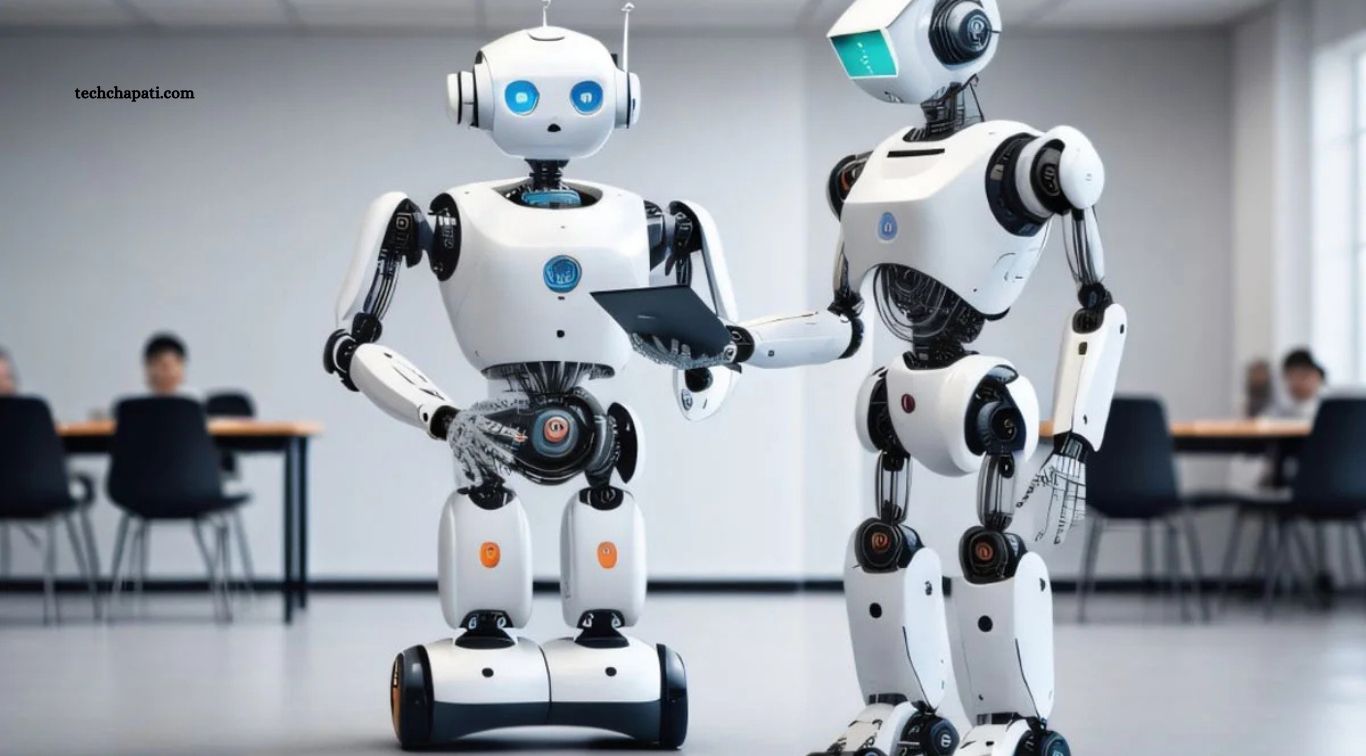
Robotics has advanced significantly in recent years, transforming the way people work, live, and interact with technology. Robots once appeared mainly in industrial factories and research laboratories, but modern systems are increasingly used in homes, hospitals, warehouses, farms, and public spaces. Improvements in artificial intelligence, sensors, computer vision, and mechanical design are making robots more capable of handling everyday tasks.
The growth of robotics and automation offers new opportunities to improve productivity, reduce repetitive work, and support people in different industries. From robotic vacuum cleaners to warehouse automation systems, these technologies are becoming part of daily life. Understanding the latest robotics advances helps explain how automation is changing modern society and what challenges may arise as adoption continues.
Read More: Cloud Computing Innovations Changing How Businesses Operate
What Is Robotics and How Has It Evolved?
Robotics combines engineering, computer science, electronics, and mechanical design to create machines capable of performing tasks with varying levels of automation. Early industrial robots mainly handled repetitive operations such as welding, lifting, and assembling products. These machines improved manufacturing efficiency but often required carefully controlled environments and specialized programming.
Modern robots can use sensors, cameras, artificial intelligence, and advanced control systems to respond to changing surroundings. Some machines follow fixed instructions, while others can identify objects, navigate spaces, and adjust their actions based on collected data. Although fully autonomous robots remain limited in many situations, continuing advances are expanding their practical uses in homes, workplaces, and public services.
How Artificial Intelligence Is Improving Robotics
Artificial intelligence is helping robots interpret information, recognize objects, and make decisions in more complex environments. Computer vision allows robotic systems to analyze images, identify obstacles, and locate objects, while machine learning can help improve performance through training and experience. These capabilities make robots more adaptable than systems designed to repeat only one predetermined movement.
AI-powered robotics is useful in areas such as logistics, healthcare, manufacturing, and agriculture. For example, a warehouse robot may use cameras and navigation software to move packages through a busy facility, while an agricultural robot can identify weeds or monitor crop conditions. However, AI does not make every robot fully independent or error-free. Human supervision, safety controls, reliable data, and careful testing remain important for dependable operation.
Smart Home Robots Making Daily Tasks Easier
Home robotics is one of the most familiar examples of automation in everyday life. Robotic vacuum cleaners can map rooms, avoid many obstacles, and clean floors according to scheduled routines. Other household devices can assist with lawn mowing, window cleaning, and basic monitoring, helping users reduce the time spent on repetitive chores.
As sensors and navigation systems improve, home robots are becoming more convenient and capable. Some models can connect to smart home platforms, allowing users to control schedules through mobile applications or voice assistants. However, performance varies according to floor layouts, furniture, battery life, and device features. Consumers should also consider maintenance costs, privacy settings, and whether a robot genuinely solves a household problem before making a purchase.
Robotics in Healthcare and Medical Services
Robotics is playing an increasingly important role in healthcare by supporting medical professionals with specialized equipment and automated systems. Surgical robots can help trained surgeons perform certain procedures with precise instrument control, while rehabilitation robots assist patients with guided movements and physical therapy exercises. Hospitals also use automated systems to transport supplies, manage laboratory workflows, and support selected logistics tasks.
These technologies can improve consistency, reduce some forms of physical strain, and help healthcare teams manage demanding workloads. However, medical robots do not replace professional judgment or eliminate all procedural risks. Their effectiveness depends on the application, training, equipment, and patient needs. Healthcare facilities must also address costs, maintenance, cybersecurity, and regulatory requirements before adopting robotic systems.
Industrial Automation and the Future of Manufacturing
Factories remain a major area of robotics development. Industrial robots can weld components, assemble products, package goods, paint surfaces, and perform tasks that require repeated movements. Automated systems help manufacturers maintain consistent production quality while reducing workers’ exposure to some dangerous or physically demanding activities.
Collaborative robots, often called cobots, are designed to work alongside people in suitable environments. They can support tasks such as machine tending, component handling, and product inspection, depending on their configuration and safety measures. Modern factories may combine robots with sensors, data analytics, and automated inspection tools to identify production problems earlier. Nevertheless, successful automation requires proper planning, worker training, equipment maintenance, and safety procedures.
Robotics in Agriculture and Food Production
Agricultural robotics is helping farmers manage labor-intensive tasks and improve the use of resources. Robotic systems can assist with planting, harvesting, crop monitoring, targeted spraying, and weed removal. When combined with cameras, GPS, and environmental sensors, these machines can collect information that helps farmers make more informed decisions about crops and field conditions.
Automation may be especially valuable where farms face labor shortages or need to manage large areas efficiently. Precision systems can also help apply water, fertilizer, or crop treatments more selectively when designed for that purpose. However, agricultural robots must operate across changing weather, uneven ground, and unpredictable growing conditions. Their cost, reliability, maintenance requirements, and suitability for different farm sizes remain important factors in adoption.
Autonomous Robots in Warehouses and Delivery Services
Warehouses increasingly use mobile robots to move goods, transport inventory, and support order fulfillment. These systems can follow mapped routes, navigate around obstacles, and coordinate with warehouse management software. By reducing unnecessary walking and repetitive material handling, warehouse automation can help businesses process orders more efficiently and manage large volumes of products.
Delivery robotics is also developing, with some services using autonomous vehicles or small robots for specific last-mile deliveries. Their operation depends on local regulations, road and sidewalk conditions, weather, and the complexity of the delivery environment. While automation may improve efficiency for selected routes and tasks, human workers remain important for exception handling, customer service, loading, maintenance, and operations that require flexible judgment.
Robots Supporting Education and Everyday Learning
Robotics is becoming a useful tool in education, helping students explore science, technology, engineering, mathematics, and programming through practical activities. Educational robots can respond to commands, follow lines, recognize simple objects, or complete challenges designed to teach problem-solving. These hands-on experiences can make technical subjects more engaging and help learners understand how software interacts with physical machines.
More advanced robotics kits allow students to experiment with sensors, motors, coding environments, and artificial intelligence concepts. Schools and training centers can use these tools to prepare learners for careers involving automation and engineering. However, access to equipment, teacher training, maintenance, and curriculum planning can affect how effectively robotics is integrated into classrooms. Well-designed lessons should encourage creativity, teamwork, and critical thinking rather than focusing only on operating machines.
Benefits and Challenges of Everyday Automation
Robotics and automation can improve productivity, support consistent performance, and reduce the need for people to perform certain repetitive or hazardous tasks. In homes, robots can help with routine cleaning; in hospitals, automated systems can support logistics; and in factories, robotic equipment can assist with precision manufacturing. These applications can free people to focus on tasks that require communication, creativity, problem-solving, and human judgment.
Despite these advantages, automation also creates challenges involving job transitions, affordability, safety, privacy, and cybersecurity. Some roles may change or disappear, while new opportunities emerge in robotics maintenance, software development, system integration, and technical support. Businesses and governments can help workers adapt through training and education. Organizations must also evaluate potential risks, protect collected data, and ensure that automated systems are tested and monitored appropriately.
The Future of Robotics and Automation
The future of robotics will likely involve machines that can perform a wider range of tasks and cooperate more effectively with people. Advances in AI, tactile sensing, battery technology, machine vision, and robot manipulation may improve the ability of robots to handle objects and operate in less structured environments. Humanoid robots are also being developed for selected industrial and service applications, although widespread use in ordinary homes remains uncertain.
As robotics becomes more accessible, businesses and households will need to evaluate where automation provides genuine value. The most successful systems will likely combine dependable hardware, useful software, clear safety standards, and practical human oversight. Rather than replacing people in every situation, many robots will support specific tasks and work alongside human teams. Responsible development can help ensure that robotics advances deliver meaningful benefits while addressing social and economic concerns.
Frequently Asked Questions
What is robotics automation?
Robotics automation uses machines and control systems to perform tasks with limited or reduced human intervention.
How are robots used in everyday life?
Robots assist with household cleaning, manufacturing, healthcare logistics, agriculture, education, and warehouse operations.
Can AI make robots fully autonomous?
AI can improve independent decision-making, but many robots still need human supervision, safety controls, and predefined operating limits.
Will robots replace human workers?
Some tasks and jobs may change, but automation can also create new roles in programming, maintenance, engineering, and supervision.
Are home robots worth buying?
They can be useful for repetitive tasks, depending on their performance, price, maintenance needs, and your household requirements.
What is the future of robotics?
Future advances may improve robot adaptability, collaboration, navigation, and performance across homes, businesses, healthcare, and industry.
Conclusion
Robotics advances are bringing automation into everyday life, changing how people manage household tasks, produce goods, deliver services, and access healthcare. Improvements in artificial intelligence, sensors, and mechanical design are helping robots perform increasingly complex activities across different environments. These developments can improve efficiency, support safety, and create new opportunities for innovation. However, successful automation requires more than advanced machines.

1 Comment
Pingback: The Biggest Technology Policy Changes Affecting Digital Businesses - Tech Chapati