
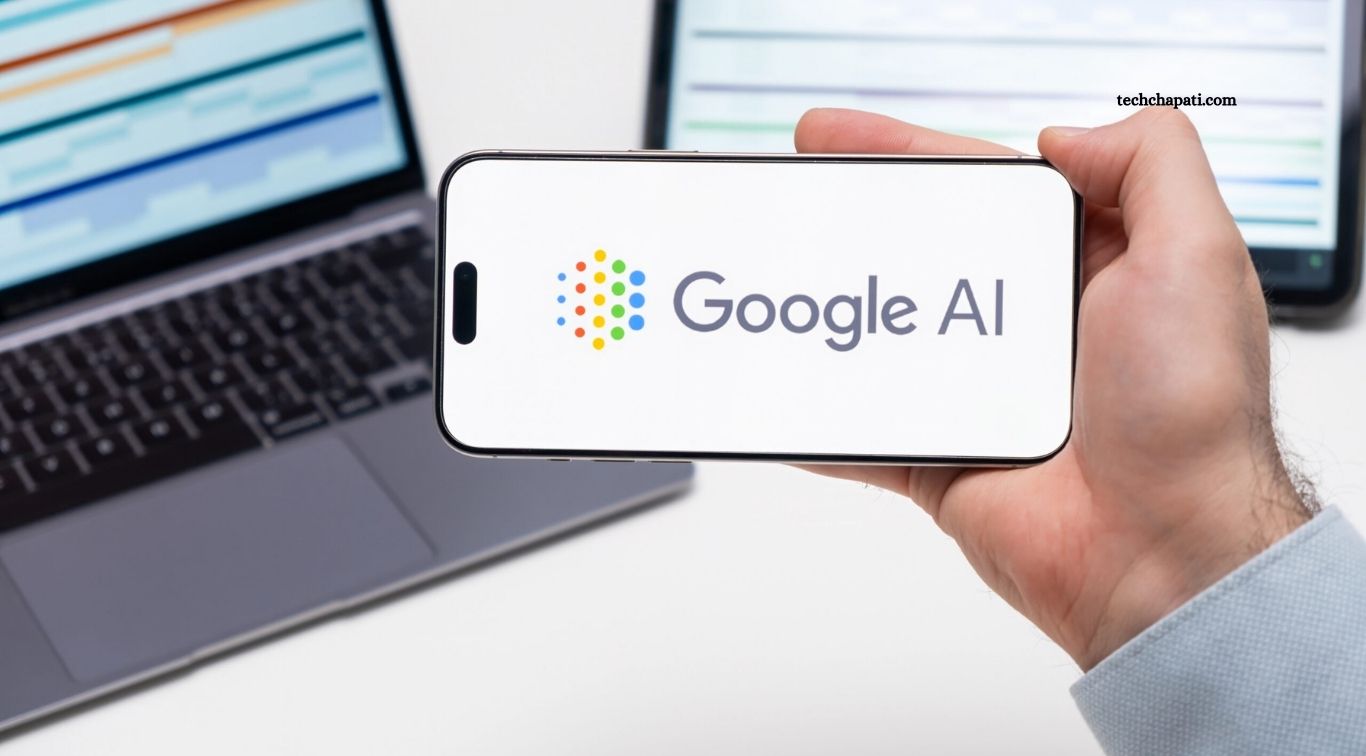
Google is expanding its AI ecosystem by bringing more intelligent features into Gemini, Search, Android, Google Workspace, and developer tools. The latest developments point to a connected experience where AI can help people research information, create content, automate tasks, and build software in fewer steps. Rather than treating artificial intelligence as a standalone chatbot, Google is integrating it into products millions of people already use.
This strategy matters for students, professionals, businesses, developers, and everyday technology users. New AI models can improve reasoning and coding, while connected applications and automated workflows can make routine work easier. However, these features also raise questions about privacy, accuracy, subscription costs, and how much control users should give AI systems. Understanding Google’s latest tools helps users identify which innovations are genuinely useful and which may require more time to mature.
Read More: AI Industry Developments That Could Reshape Technology in 2026
Gemini 4 Argon Introduces More Advanced AI Capabilities
One of Google’s most significant recent announcements is the launch of Gemini 4 Argon on October 13, 2026. According to Reuters, Google introduced the model for developers and businesses, emphasizing complex, multi-step tasks in areas such as coding, finance, law, cybersecurity, and scientific research. The release represents another step in the competition to develop AI systems that can reason through demanding problems rather than simply respond to straightforward prompts. (Reuters)
The model’s practical value will depend on how consistently it performs in real-world situations. Businesses may use advanced reasoning capabilities to analyze documents, assist developers, and support specialized workflows, but important outputs still require verification. Google has also been expanding access to its Gemini models through its AI applications and developer services. Availability, usage limits, and pricing can vary by subscription or API arrangement, so users should check the relevant terms before choosing a plan.
The Gemini App Is Becoming a More Connected AI Assistant
Google is developing Gemini into an assistant that can do more than answer questions. Its expanding capabilities include helping users plan activities, work with information, create content, and interact with connected applications. Google’s September 2026 AI updates highlighted Gemini 4 Argon, newer Flash models, and additional connected-app experiences designed to make the assistant more useful across different tasks. (Google’s AI updates)
Connecting services can reduce the need to switch between applications to gather information or complete everyday work. Depending on the features available and permissions granted, an assistant might help organize information from connected services or prepare content using relevant context. These capabilities are not identical for every user, however. Access can depend on location, account type, subscription, device, and rollout stage. Users should review connected-app permissions carefully and only enable access to services they genuinely want Gemini to use.
Google Workspace Is Bringing AI Into Everyday Workflows
Google is expanding Gemini’s role inside Workspace applications, including Gmail, Docs, Drive, Sheets, Slides, Chat, and Calendar. At its October 8, 2026, Gemini at Work event, Google Cloud described a more unified AI agent intended to help people answer questions, work with organizational knowledge, create media, and write or run code. Google also highlighted capabilities designed to connect information across work applications rather than treating each document or conversation separately. (Google Cloud)
For everyday users, this could mean faster document drafting, clearer summaries, easier spreadsheet analysis, and more efficient presentation preparation. Teams may also benefit from asking questions in natural language instead of manually searching through multiple files. Nevertheless, generated content can contain errors, and access to company information must be managed responsibly. Organizations should establish permissions, data-handling policies, and review procedures before relying on AI-generated reports or using automated tools for consequential decisions.
Google Search Is Evolving Beyond Traditional Results
Google is continuing to incorporate generative AI into Search through experiences such as AI Overviews and AI Mode. These features are designed to help people explore complicated questions, receive synthesized information, and ask follow-up questions without starting an entirely new search. Google’s stated direction is to make searching more conversational while preserving ways for users to explore supporting web content. (Google Search updates)
This shift could change how people research products, learn new subjects, and compare information online. Instead of opening numerous pages immediately, users may first receive a summarized explanation and then explore selected sources for more detail. However, AI summaries can omit context, misinterpret information, or occasionally provide inaccurate claims. For sensitive, technical, financial, or health-related topics, readers should examine sources and compare evidence rather than relying exclusively on a generated summary.
AI Tools Are Making App Development More Accessible
Google is also expanding tools that help people create software with AI assistance. Platforms such as Google AI Studio let users experiment with models and build applications using natural-language instructions, making it easier to turn an idea into a working prototype. On October 14, 2026, The Verge reported that Google had introduced a simpler way for users in the United States to launch certain personally created, AI-assisted Android apps through Google Play, without first connecting their phones to a computer. The personal apps remain separate from the public Play Store catalogue. (The Verge)
These developments may encourage students, entrepreneurs, and non-specialist creators to experiment with software development. A person could prototype a small productivity tool, test an idea, or learn how an application works before investing in a larger project. However, AI-generated apps still need testing for reliability, security, accessibility, and usability. Public distribution also involves additional requirements and review. AI can lower the barrier to creating software, but it does not eliminate the need for sound engineering or responsible handling of user data.
Google’s AI Ecosystem Is Expanding Creative Possibilities
Google’s AI tools increasingly support creative work, including image generation, video creation, editing, and content development. At Google I/O 2026, the company introduced Gemini Omni, a model focused on generating and transforming media, alongside newer Gemini models designed to support more capable interactions. Google has also highlighted creative tools that connect AI-generated content with its broader ecosystem. (Google I/O 2026 announcements)
These tools can help creators develop concepts, test different visual styles, prepare storyboards, and produce initial drafts more quickly. Small businesses may find them useful for marketing experiments, while educators and students can explore ways to explain ideas visually. Still, AI-generated content may need substantial editing to meet professional standards. Users should also pay attention to intellectual property, permission to use source materials, disclosure expectations, and the risk of generating misleading or inaccurate media.
Gemini Is Becoming More Useful for Developers
Google’s AI ecosystem includes services for developers who want to build AI-powered applications rather than simply use existing tools. The Gemini API and Google AI Studio provide ways to experiment with models, while Google Cloud offers services for organizations deploying AI applications at scale. Newer model capabilities are intended to support complex reasoning, coding tasks, and workflows that involve several connected operations.
For developers, the advantage is the ability to build features such as conversational interfaces, document analysis, automated research, and customized assistants. Access to model APIs can also help teams test ideas before committing to a larger deployment. However, developers must evaluate response quality, latency, token usage, data handling, and total operating costs. A powerful model is not necessarily the best choice for every application; simpler models may provide better value for routine tasks that do not require advanced reasoning.
AI Safety, Privacy, and User Control Remain Essential
As Google connects AI with more applications and gives it additional ways to complete tasks, privacy and security become increasingly important. An assistant that can access emails, documents, calendars, or other services may provide more relevant help, but it also creates a greater need to control what information it can see and what actions it can take. Users should understand the permissions they grant and how connected features handle their information.
Businesses should complement these controls with employee training, data-access policies, audit procedures, and human review of important decisions. Individuals can reduce risk by checking account settings, limiting unnecessary permissions, and verifying AI-generated information before acting on it. AI features and protections can vary by product and region, so it is worth reviewing the specific terms that apply to each service. Greater integration can improve convenience, but trust depends on transparency and meaningful user control.
What Google’s Expanding AI Ecosystem Means for Users
For consumers, Google’s approach could make AI feel less like a separate destination and more like a natural part of everyday digital life. People may use Gemini to organize ideas, Search to investigate questions, Workspace to complete work, and AI Studio to experiment with their own applications. When these tools work well together, users can move from discovering information to creating something useful with fewer interruptions.
The best way to benefit is to start with a clear need rather than trying every new feature. Students might explore research and study tools, professionals could test document summaries, and developers may experiment with APIs or rapid prototyping. Before adopting a paid plan, compare usage limits, availability, and alternatives. Google’s ecosystem offers many possibilities, but the most useful features will be those that improve your actual workflow without creating unnecessary costs or privacy concerns.
Frequently Asked Questions
What is new in Google’s AI ecosystem in 2026?
Recent developments include Gemini 4 Argon, more connected Gemini experiences, AI agents for Workspace, creative AI tools, and improved options for building applications.
What is Gemini 4 Argon?
Gemini 4 Argon is Google’s AI model introduced in October 2026 for demanding tasks such as coding, scientific work, and specialized business applications.
How is Google adding AI to Workspace?
Google is integrating Gemini into applications such as Gmail, Docs, Drive, Sheets, Slides, Chat, and Calendar to help users create content and work with information.
Can beginners build apps with Google’s AI tools?
Yes. Google AI Studio and related development tools can help beginners create prototypes using natural-language instructions, although testing and security knowledge remain important.
Is Google’s AI ecosystem free to use?
Some features are available without payment, while advanced models, higher usage limits, and certain tools may require subscriptions or paid API access.
How can users protect their privacy when using Gemini?
Review connected-app permissions, avoid sharing unnecessary sensitive information, check account settings, and verify important outputs before acting on them.
Conclusion
Google’s expanding AI ecosystem reflects a broader shift toward intelligent tools that work across search, productivity software, creative applications, and software development. Gemini 4 Argon, connected-app experiences, Workspace agents, AI-assisted app creation, and generative media tools illustrate how Google is trying to make AI more capable and accessible. Together, these developments could help users move from asking questions to completing more complex tasks. The long-term success of these tools will depend on their reliability, affordability, safety, and usefulness in everyday situations.

1 Comment
Pingback: Semiconductor Industry Trends Driving the Next Wave of Computing - Tech Chapati